🌞 Solar vs Gas Generators – Which Should You Buy in 2025?
When it comes to home backup power, solar generators vs gas generators is one of the most important comparisons you’ll make. Each technology serves a different purpose — solar is quiet, clean, and renewable, while gas provides high raw power for demanding applications.
If you’re preparing for power outages, camping off-grid, or living in an RV, choosing between these two options can be confusing. In this detailed guide, we’ll break down the performance, cost, runtime, noise, and eco-friendliness of both, so you can confidently decide which type of generator fits your lifestyle best.
💡 Quick Tip: Want to explore top solar models right away? Visit our detailed Best 3000 Watt Solar Generators in 2025 guide for a full comparison of the top-rated options.
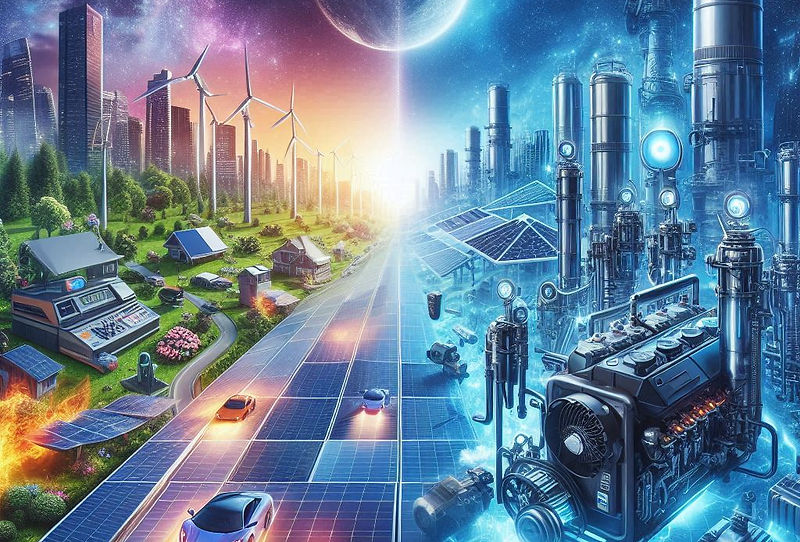
In today’s world, power security is no longer a luxury — it’s a necessity. With rising energy demands, unpredictable weather patterns, and a growing interest in eco-friendly technology, backup power solutions have become a household priority.
But when choosing a generator, the age-old debate arises:
👉 Should you buy a solar generator or stick with a traditional gas-powered generator?
Both options come with unique advantages and trade-offs. Gas generators have long been the go-to for whole-home backup due to their raw power and reliability. Meanwhile, solar generators represent a cleaner, quieter, and more modern alternative, making them especially popular in 2025 among homeowners, campers, and RV travelers.
This ultimate guide will break down everything you need to know — including how each generator works, their pros and cons, real-life scenarios, long-term costs, and expert recommendations to help you make an informed decision.
.jpeg)
🔋 What is a Solar Generator?
A solar generator is essentially a portable power station powered by renewable energy. It typically consists of:
-
Solar panels – capture sunlight and convert it into electricity.
-
Charge controller – regulates voltage and prevents overcharging.
-
Battery storage – stores electricity for later use (usually lithium-ion or LiFePO4).
-
Inverter – converts stored DC power into AC power for household appliances.
Unlike gas generators, solar units don’t produce electricity directly — they store it first. They can also be charged by wall outlets or car chargers, making them versatile for both on-grid and off-grid use.
Popular solar generator brands in 2025 include Jackery, EcoFlow, Bluetti, Anker, Goal Zero, Geneverse, and OUPES.
.jpeg)
⛽ What is a Gas Generator?
A gas generator uses an internal combustion engine to generate electricity. Fuel (gasoline, propane, or natural gas) is burned, which powers the alternator, producing electrical output.
Gas generators have been the traditional backbone of emergency backup power for decades. They’re available in multiple formats:
-
Portable generators (2,000–10,000W) – for job sites, RVs, or small home needs.
-
Standby generators (10,000–25,000W+) – permanently installed outside homes, automatically kicking in during outages.
-
Dual-fuel or tri-fuel units – provide flexibility to run on gasoline, propane, or natural gas.
⚙️ Example: Check our in-depth DuroMax XP4400E Review — one of the best affordable gas generators with electric start and rugged design for home use.

⚡ Performance & Power Output Comparison
Here’s how solar and gas generators stack up in raw power, runtime, and general usability.
Solar excels in efficiency and portability, while gas wins in continuous power delivery.
✅ Pros & Cons: Solar Generators
Pros
-
Zero noise and emissions.
-
Renewable energy – free fuel from the sun.
-
-
Safe indoors – perfect for apartments and basements.
-
Multiple charging options (solar, wall, car).
-
Long lifespan (LiFePO₄ batteries = 3000–6000 cycles).
Cons
-
Higher initial investment.
-
Limited capacity (may not run heavy-duty tools for long).
-
Reliant on weather for solar recharging.
✅ Pros & Cons: Gas Generators
Pros
-
Higher wattage output – powers large appliances easily.
-
Lower purchase price compared to solar.
-
Runs continuously as long as you refuel.
-
Widely available and proven technology.
Cons
-
Noisy and polluting.
-
Requires regular maintenance.
-
Dangerous indoors due to carbon monoxide risk.
-
Fuel prices fluctuate and can be expensive long term.
🏕 Real-World Use Cases
-
Home Backup:
-
Solar → Great for running essentials like fridges, lights, internet, and CPAP machines during outages.
-
Gas → Better for running central AC, well pumps, or whole-house loads.
-
-
RV and Van Life:
-
Solar → Silent, eco-friendly, charges during the day, powers induction cooktops, laptops, entertainment.
-
Gas → Only used as backup when solar runs out.
-
-
Camping & Outdoor Adventures:
-
Solar → Perfect for eco-conscious travelers who want to power lights, cooking, and cameras.
-
Gas → Not practical due to noise and fumes.
-
-
Construction Sites:
-
Solar → Limited, unless using very high-capacity models.
-
Gas → Still the king for power tools and long runtimes.
-
-
Emergency Preparedness:
-
Solar → Essential for safe indoor use when fuel is scarce.
-
Gas → Works when sun isn’t available, but requires stored fuel.
-

🔋 Efficiency, Charging, and Runtime
Solar generators rely on sunlight and battery capacity. A premium 3000 watt solar generator can recharge in 2–4 hours using solar panels and power a refrigerator for over 24 hours.
Gas generators depend entirely on fuel availability. If you store enough gasoline or propane, they can run indefinitely — but with the cost and hassle of refueling.
🔗 Learn how solar charging efficiency varies across top brands in our EcoFlow DELTA Pro vs Bluetti AC200P Comparison.
🔈 Noise and User Experience
If silence matters — say, during the night or while camping — solar generators are unbeatable.
Most models operate at under 50 decibels, making them ideal for indoor or RV use.
Gas generators, however, sound more like a lawn mower. Even with mufflers, they produce between 65–80 dB, which can be disruptive in residential areas.
🧰 Maintenance and Durability
Maintenance is another major difference between solar vs gas generators.
Solar units have no moving parts — you just clean panels and occasionally check cables.
Gas units need regular oil changes, fuel stabilizers, and spark plug replacements.
🔗 Read how LiFePO4 technology extends battery life in our Best Portable Generators for Home & RV guide.

❓ FAQs
Q1: Which is cheaper to run long-term?
Solar generators win in the long run since sunlight is free, while gas generators continuously require fuel and maintenance.
Q2: Can solar generators power an entire house?
Yes, large models like the EcoFlow DELTA Pro or modular systems with expansion batteries can. However, gas generators still provide higher wattage for whole-house central AC.
Q3: What about hybrid setups?
Many homeowners combine both—solar for everyday use and quiet backup, gas for extended outages.
Q4: How safe are gas generators indoors?
They are unsafe indoors due to carbon monoxide. Always operate outside.
Q5: How long do solar generators last?
LiFePO₄ batteries last up to 10 years with 3,500–6,000 charge cycles.
Q6: Can I run medical devices like a CPAP on a solar generator?
Yes, and they are safer than gas since they can operate indoors overnight without fumes.
Q7: Which is better for RV living?
Solar wins for everyday living due to silence and renewability. Gas is only a backup.
🎯 Final Recommendation
If you value sustainability, silence, and safety indoors, a solar generator is the smarter choice in 2025. It’s an upfront investment, but one that pays off with free solar power, low maintenance, and reliability.
If you need continuous high power for demanding loads, or want the cheapest upfront solution, a gas generator may still be the right fit.
👉 For most modern households, the Jackery Explorer 3000 Pro or EcoFlow DELTA Pro represent the sweet spot: portable, efficient, and strong enough to cover essential backup needs while staying eco-friendly.